 531-355-1234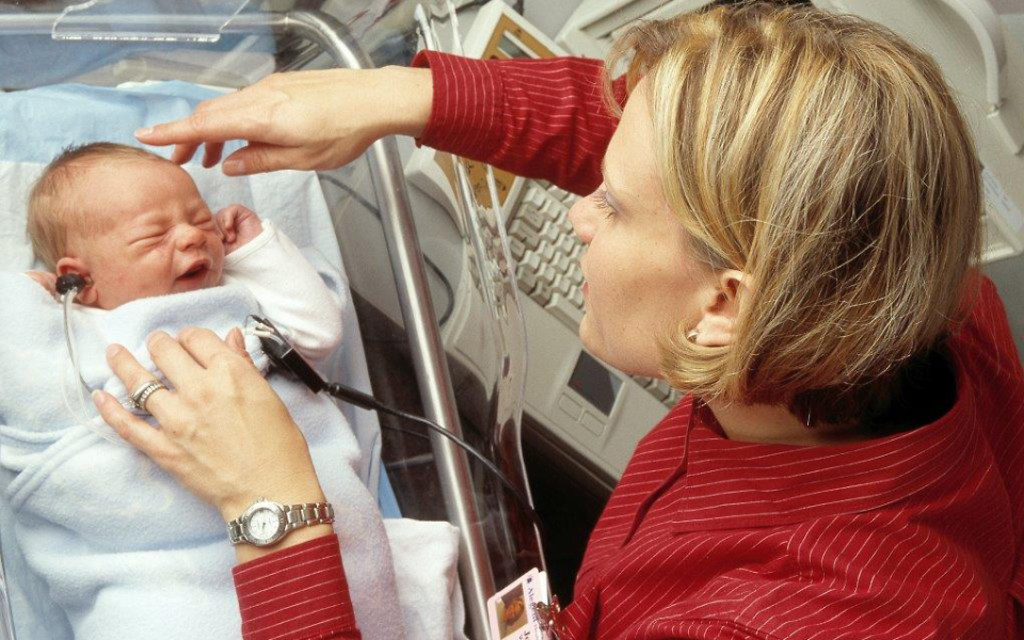
In the Hospital
When a baby is born in a hospital setting, parents should expect a series of tests to be conducted, including Newborn Hearing Screening. Because so much can be done to lessen the impact of hearing loss when detected early in a baby's life, it is important to screen for hearing loss before your baby is released from the hospital. It is important for all babies to be screened; however, not all babies are born in hospitals. Ideally, babies born at home should be tested before they are 1 month old.
Safe, Simple, Painless Testing
In the past, parents had to wait until a child was old enough to take a formal hearing test in order to check for hearing loss. Today, technology allows specialists to test hearing in the first days of life. Newborn screening is safe, simple and painless, takes only a few minutes, and could make a significant difference to the future of a child with hearing loss.
Ability to Learn Begins Immediately
A baby's ability to learn language and speech begins almost immediately. In fact, before their first birthday, babies babble many of the sounds spoken around them. By their first birthday, babies will be able to figure out what words mean.
Detecting hearing loss early helps prevent delays in speech and language. If parents and doctors do not discover that a baby has a hearing loss early on, slow development of speech and language can occur. This can create difficulties in family communication as well as academic and social problems.
Test Results
If your child does not pass the hearing screening test, he or she will be referred for follow-up testing. However, it is important to know that although 10 percent of all babies do not pass the screening test, only one percent actually has a hearing loss.
When a baby with normal hearing fails the newborn hearing screening test, it is likely due to debris in the ear canal, fluid in the middle ear, or movement and/or crying during the test. Although most babies will pass the follow-up hearing testing, it is very important to take your baby in for this. Follow-up testing is the only way to be sure about your baby's hearing.
On the other hand, some babies can pass the hearing test and still have a hearing loss; however, this occurrence is rare. A child who has a hearing loss may pass the hearing test because:
- The hearing loss affects pitches that the screening equipment does not test.
- Some mild hearing loss may not be picked up by the screening test.
- Some infants have hearing loss that is not present at birth.
A small number of babies born with normal hearing may develop a hearing loss after the newborn period. This condition may result from various illnesses or from genetic causes. Additionally, certain medications used during trauma or disease can result in hearing loss after the newborn period.
Further Testing
A child who fails a hearing test will be referred to a pediatric audiologist for further testing. If these tests still show a hearing loss, a more thorough test of the baby's hearing, called a diagnostic Auditory Brainstem Response (ABR) test, will be conducted immediately.
If your baby passes the ABR test, no further testing will be conducted. However, you should continue to watch your baby for hearing loss that occurs after the newborn period.
If your baby fails the ABR test, your doctor will call upon a group of professionals who will work with you and your baby. These specialists are trained to limit the effects of hearing loss on your baby's development. They will work with you and your baby to help learn communication skills, recommend appropriate hearing instruments, coordinate the efforts of providers, and much more. It is essential that appropriate services begin as soon as a hearing loss is diagnosed, preferably no later than six months of age.
More Information
For more information, please visit babyhearing.org. The site provides information on hearing loss in children, early intervention, common questions parents of deaf and hard of hearing parents have, and much more.
You may also like these
See All