
 531-355-1234
Hi, I'm Megann Sauer and I'm a pediatrician at Boys Town Pediatrics. A common question that we're frequently asked in the wintertime, in clinic, is: when is it too cold for my child to go outside and play? One of the things to remember is that windy days can feel much colder than the actual temperature outside. The wind chill factor is the most important thing to keep in mind.
Here's an easy way to break it down:
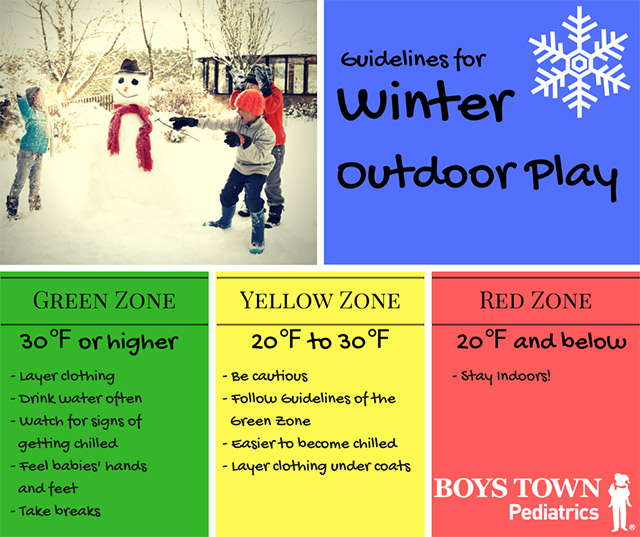
When it is 30 degrees and higher outside, this is the green zone. It's okay for your kids to comfortably play outside. Just remember to layer their clothes and make sure they're wearing hats and mittens. Try to offer water frequently, as that helps regulate body temperature. Watch for any signs that your child is getting chilled, such as shivering. If you do see this, bring them inside immediately, even if they insist they're fine. Feel babies' hands and, if possible, their feet regularly to see if they're turning icy. It's always a good idea to come inside for a quick break every 40 minutes or so, just to warm up a bit.
When the temperature is 20 to 30 degrees outside, this is the yellow zone. Be cautious. It's okay for your kids to be outside—just follow the same rules that you do in the green zone. However, remember that it's easier for children to become chilled sooner. It's especially crucial to layer your kid's clothing. They may become sweaty from playing outside, but they need to make sure they're wearing more than a thin shirt if they do take off their coat.
The red zone is when the wind chill temperatures drop below 20 degrees. The rule here is to stay indoors. The risk to your child's skin becomes too great when the temperatures drop below 20. Stay indoors and have fun with indoor activities.
Winter fun is approaching. Just remember the green, yellow, and red zones before you head outside to ensure that everyone stays safe.
The winter season brings snowflakes and ice and a playground full of outside activities like sledding, snowman making, ice-skating, building forts and snowball fights. Families will likely spend time outdoors playing and it is important to keep children safe while having fun. Physical activities can be great stress relievers for children who are cooped up inside at school and home for one too many hours during the cold winter months.
The American Council of Exercise recommends children get approximately 60 minutes of physical activity each day. Play can be broken up into intervals anywhere between 10 to 20 minutes and Boys Town Pediatrics offers winter safety guidelines for your family.
Temperature Guide
When is it too cold for your child to go outside and play? Follow the colored safety zone guide.
- Green zone. The safest temperature to go outside to play is 30 degrees or higher.
- Yellow zone. Playing in temperatures between 20 to 30 degrees should be carefully watched by parents as the weather will affect body temperatures to cool quickly.
- Red zone. Your child should not play outside in temperatures less than 20 degrees. Keep in mind the wind chill factor can cause the actual temperature outside to be much colder, especially if skin is not properly covered.
Bundle Up Properly
- Dress in layers. Keep the body warm with hats, mittens, scarves, socks, boots and a coat or snowsuit depending on the activity and exposure. Your child may become sweaty from playing outside but with proper layering, some layers may be taken off.
- Supervise and bring extra clothing. Clothing may become wet from the snow and sometimes children are unaware when they are so caught up in having fun with friends. Be sure to always supervise children playing and bring extra clothing to switch out with wet clothing.
- Take breaks. Watch for any signs of your child being too cold such as shivering and take quick breaks inside between intervals of around 40 minutes of play to keep body temperatures warm.
- Hydrate. Be sure your child is hydrating with water in order to help regulate body temperature.
Make Outdoor Playtime Fun
Get creative and join in on the fun with your child. Parents can help build snow forts, protect the forts with a snowball battle, build snowman families or pretend to hike together on an epic journey up Mount Everest! Remember to watch the temperature, bundle up and most importantly have fun with your child this winter season.
You may also like these
See All